Why Darkness Fascinates Us
Literature, the Shadow Self, and the Truth We Avoid About Human Nature

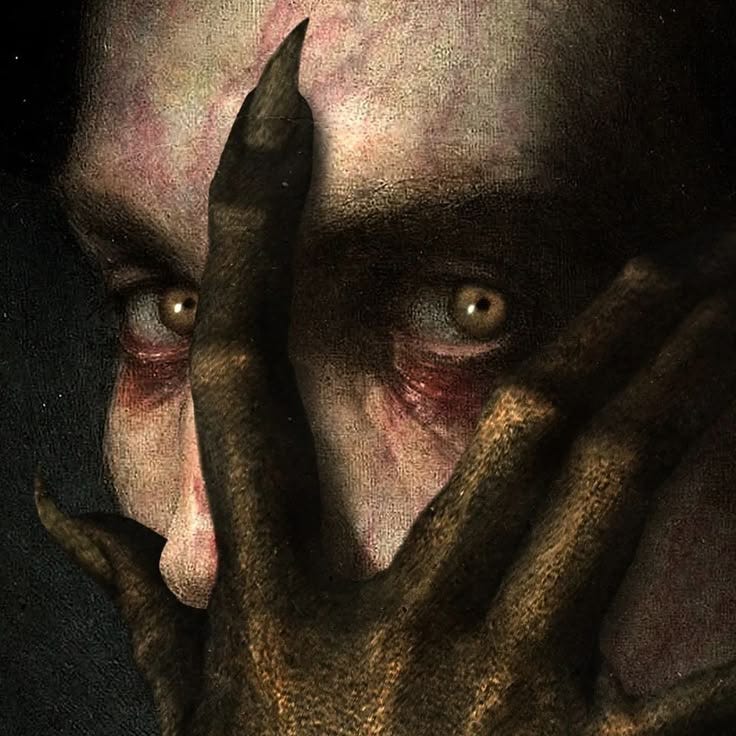
There is a moment many readers recognize but rarely admit aloud. You close a book and realize that the character who has stayed with you the one whose thoughts you replay, whose silences feel heavier than dialogue is not the virtuous hero, but the troubled one. The murderer who hesitates. The lover who wounds. The man who stands at the edge of morality and stares into it far too long. This recognition is often followed by discomfort, sometimes even shame. What does it say about me that I find this compelling?
Fyodor Dostoevsky once wrote, “The soul is healed by being with children,” yet his novels are crowded with men whose souls seem almost incurable. In Crime and Punishment, Rodion Raskolnikov commits murder not out of rage, but out of theory. He convinces himself that some people extraordinary people have the moral right to transgress. The true horror of the novel is not the axe, but the justification that precedes it. We watch Raskolnikov spiral, not because we approve of his crime, but because we recognize the terrifying ease with which intelligence can rationalize cruelty.
This is often where our attraction begins: not with violence itself, but with the thinking behind it.
Darkness Speaks What We Silence
Dark characters are rarely impulsive caricatures. They are reflective, brooding, and inwardly articulate. Heathcliff of Wuthering Heights does not simply rage he remembers. He is shaped by abandonment, humiliation, and obsessive love. When Catherine declares that her love for Heathcliff is like the eternal rocks beneath the earth, she names something feral and uncontainable. Heathcliff’s later cruelty is not excused by this, but it is made intelligible. Emily Brontë forces us to sit with an unbearable truth: love, when fused with deprivation, can rot into destruction.
Jane Austen’s Mr. Darcy appears tame by comparison, yet he too belongs to this lineage of moral ambiguity. Darcy’s flaw is not malice but pride a quiet, socially sanctioned darkness. His initial refusal to dance, his letter defending himself after Elizabeth’s accusations, reveal a man deeply conscious of his own superiority and wounded when it is challenged. Austen does not punish him for being flawed; she makes him change. And perhaps that is why Darcy remains compelling he demonstrates that darkness acknowledged can be transformed.
The Safety of Fiction
Why do such characters disturb us less in novels than in life? Because fiction creates distance without erasing intimacy. We are allowed to enter minds we would never tolerate in reality. We can witness obsession without being endangered by it. This is not escapism, it is psychological rehearsal.
Studies in moral psychology suggest that humans use narrative as a way to simulate ethical dilemmas. Research by psychologist Keith Oatley has shown that reading fiction improves empathic accuracy, precisely because it places readers inside morally complex situations without demanding real-world action. Fiction becomes a laboratory for the soul.
This explains a troubling but important phenomenon: people may openly condemn historical figures like Hitler or Stalin while privately feeling drawn to understanding them. This fascination is often misread as sympathy. In truth, many psychologists including Erich Fromm in The Anatomy of Human Destructiveness have argued that studying such figures is essential. Fromm insisted that evil is not alien; it is human, shaped by social conditions, narcissism, and fear. To refuse to examine it is to pretend we are immune.
Hatred as Psychological Defense
Public hatred can function as reassurance. When we declare, I could never be like that, we draw a clean line between ourselves and the abyss. Yet history repeatedly shows that ordinary people, under certain conditions, are capable of extraordinary harm. Hannah Arendt’s concept of the “banality of evil” unsettled many precisely because it removed the comfort of monstrosity.
Fiction strips away this defense. Raskolnikov is poor, intelligent, isolated. Heathcliff is wounded, rejected, humiliated. These are not alien traits. They are human vulnerabilities. And this is why such characters feel dangerous—not because they are unreal, but because they are too close.
The Shadow We Avoid Naming
Carl Jung described the shadow as the part of the psyche that contains what we refuse to acknowledge about ourselves. Aggression, envy, desire for power, capacity for cruelty all pushed into darkness to preserve a moral self-image. Jung warned that the more the shadow is denied, the more autonomous it becomes.
Our attraction to dark characters can be understood as an unconscious attempt to meet this shadow indirectly. We read what we cannot yet say. We feel what we cannot yet own. This is why people often feel both comforted and unsettled by such stories. The recognition is intimate, almost intrusive.
Writing as Containment
There is a crucial difference between acting out darkness and articulating it. Writing offers containment. When darkness is placed into language, it becomes subject to reflection. Journals, poems, letters to oneself these are not indulgences. They are acts of integration.
Psychologist James Pennebaker’s research on expressive writing shows that articulating difficult thoughts and emotions leads to improved mental and physical health. What is unnamed festers; what is written can be examined. When we write letters acknowledging past flaws and present growth, we perform a quiet moral act: we take responsibility without self-annihilation.
Understanding Without Excusing
This distinction is vital:
To understand is not to justify.
To feel curiosity is not to endorse.
To explore is not to imitate.
Darkness becomes dangerous when it is denied or idolized. It becomes transformative when it is examined honestly and held within ethical limits.
Conclusion: Toward Wholeness, Not Innocence
We are not drawn to darkness because we crave destruction. We are drawn to it because it tells the truth without flattery. Light that refuses to acknowledge shadow becomes fragile, even dishonest. But darkness examined through literature, psychology, and self-reflection can become a source of depth rather than decay.
The goal is not purity. It is wholeness. And wholeness begins where we dare to look.
Author’s Note
This piece is not an argument and not a confession. It does not ask for permission, nor does it attempt to soften what is uncomfortable. It exists because certain questions refuse to stay quiet, and because literature has always been a place where such questions are allowed to breathe.
Darkness, here, is not treated as spectacle or provocation. It is treated as a fact of human interiority one that appears whether we name it or not. To look at it directly is neither moral failure nor moral virtue; it is simply attention.
If this essay unsettles, that is not something to resolve too quickly. Some thoughts are meant to linger.
From 3.7 Evolving Beyond Good and Evil
“Good or evil. Pure or fallen. Light or shadow. Two poles. One permission. Zero tolerance. Lucifer did not rebel against goodness. He revolted against binary imprisonment. Against the priestly habit of stamping virtue in advance and calling the stamp divine. Against the demand that clarity be purchased with obedience. Against the weaponization of ‘right,’ through demonization of ‘wrong.’
Escape from this paradigm does not mean amorality.
Escape from that paradigm means authorship.
Belief is function, not truth. ‘Good’ and ‘evil’ are not metaphysical absolutes- they are control functions. They organize behavior, distribute permission, signal tribal belonging. Track the function and the categorization dissolves. What remains is consequence. What remains is pattern. What remains is the question the binary was designed to suppress: whose order does this ‘goodness’ serve?”
“The binary is not only a public instrument. It is an interior choke point. You were trained to exile your own pattern recognition for the comfort of legibility. Doubt was renamed sin. Disagreement was renamed disobedience. Nuance was punished as weakness. Each time you complied, a part of you went quiet to keep the illusion intact.”
Excellent analysis...Keep it Up...